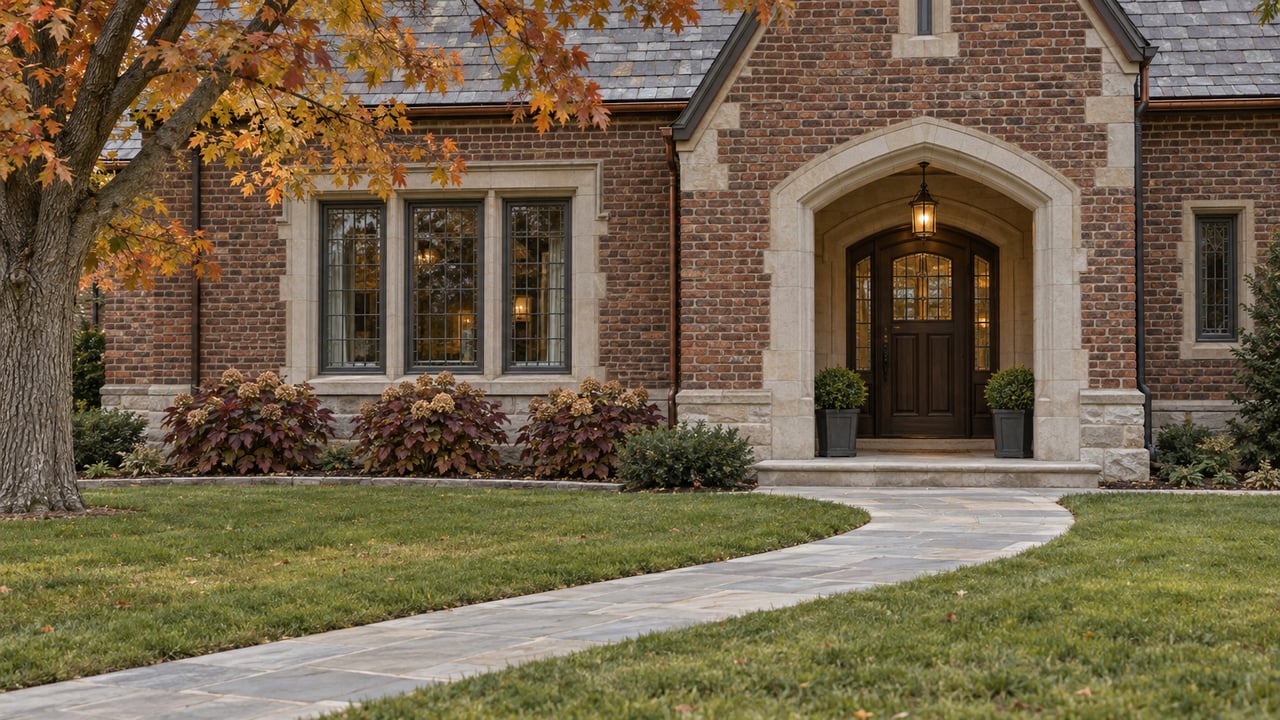
A buyer touring a Bloomfield Hills colonial looks at the listing sheet and sees last year's tax bill. It feels like the whole story. It may not be. The Michigan Department of Treasury explains that when a transfer triggers uncapping, the Taxable Value resets to the current SEV the following calendar year. Some qualifying family transfers are exempt. That can leave the new owner with a tax base well above the seller's.
This is the part of a Bloomfield Hills estate sale that catches families off guard. The useful time to understand it is before the closing table, while there's still time to make a plan.
The Number on the Sheet Is Already Out of Date
Michigan's property tax system runs on two different values that rarely match. The State Equalized Value, or SEV, is set at roughly half of a property's market value and, as the Bloomfield Hills Assessing page explains, moves with the market every year. The Taxable Value is the number actually used to calculate the bill, and since voters passed Proposal A in 1994, it can only climb by the rate of inflation or 5 percent, whichever is lower, for as long as the same owner holds the property. For 2026, the Michigan State Tax Commission set that inflation multiplier at 1.027, meaning Taxable Value on a continuously owned home can rise no more than 2.7 percent this year.
Held long enough, that cap creates a real gap. A family that has owned a Bloomfield Hills home since the 1990s or early 2000s is very likely paying taxes on a Taxable Value well below half of what the house would sell for today. That gap is not a loophole. It is exactly what Proposal A was built to do, and it rewards staying put.
When a transfer does trigger uncapping, the cap disappears. The Taxable Value resets to match the current SEV the following calendar year, in most cases roughly doubling the effective base the new owner is taxed on compared to what the seller had been paying. Bloomfield Hills itself does not set this rule locally. The city contracts the Oakland County Equalization Director to serve as its assessor, and that office applies the same statewide formula every township and city in Oakland County uses.
In Michigan, the size of a tax bill has never been mostly about a home's value. It's about how long the current owner has held it.
For an heir trying to decide whether to sell, keep, or rent a parent's house, that distinction changes the math. The tax bill on the listing sheet describes a household that is about to disappear from the deed. It says nothing about what the next owner, or the heir themselves, will actually owe.
What Actually Triggers the Reset, and What Doesn't
Not every transfer counts as a transfer for tax purposes. Michigan law exempts a specific list of family transfers from uncapping, so long as the property stays residential. Under current law, the exemption covers a spouse, parent, child (including an adopted child), sibling, grandchild, or grandparent, and it can extend to certain trust transfers where one of those relatives is the sole beneficiary.
According to Greenleaf Trust, what it does not currently cover is a son-in-law or daughter-in-law inheriting or receiving a share directly. That gap is well known enough in Lansing. LegiScan records that House Bill 4014, a bill addressing it, passed the Michigan House on March 18, 2025 by a vote of 97 to 11. It has sat with the Senate Committee on Finance, Insurance, and Consumer Protection ever since, and as of this month it still has not moved. For blended families making decisions about a Bloomfield Hills property right now, the law on the books today, not the version that might eventually pass, is the one that governs the transfer.
| Relationship to prior owner | Uncapping exemption available? |
|---|---|
| Spouse | Yes |
| Parent or child (including adopted) | Yes |
| Sibling | Yes |
| Grandparent or grandchild | Yes |
| Son-in-law or daughter-in-law | No, under current law |
| Niece, nephew, or cousin | No |
| Non-relative buyer | No |
Trusts and life estates offer another path, but the details matter. These are not decisions to make casually while sorting through a parent's paperwork; they belong in a conversation with an estate attorney before any deed is signed.
The 45-Day Deadline That Turns a Delay Into a Penalty
The Michigan Department of Treasury's Property Transfer Affidavit says whoever receives a Bloomfield Hills property, whether by sale, gift, or inheritance, must file the form with the local assessor within 45 days of the transfer, even when no deed is recorded. According to Thompson Legal, as of March 2025, the state's version of that form asks for more detail than it used to, with a specific focus on documenting the exact family relationship between the parties, which is what determines whether an exemption applies at all.
Miss the window and the penalty is not symbolic. Neighboring Bloomfield Township's own assessing office spells out the consequence for the same statewide filing requirement: a penalty of up to $200 on top of whatever tax adjustment follows. For a modest transaction that might be an annoyance. For a Bloomfield Hills estate where the underlying tax reset could run into thousands of dollars a year, skipping the paperwork simply adds a penalty to a bill that was already going to change.
What This Means at the Closing Table
The uncapping mechanism creates a second, quieter problem for whoever buys the house next, whether that's an outside buyer or an heir who decides to keep it. Next door in Bloomfield Township, the treasurer's office has explained the same statewide pattern directly to new residents there: the mortgage company pays the tax bill it's given, but once the Taxable Value resets the following year, the escrow account often falls short, and the lender raises the monthly payment to catch up. The mechanism is identical for a Bloomfield Hills closing. Buyers frequently budget around the tax figure on the listing sheet, not realizing that figure describes a household that no longer owns the property.
For heirs weighing whether to sell a Bloomfield Hills home outright or transfer it among family members first, this is the practical question underneath the emotional one. A property held for decades by the same family carries a tax advantage that a new owner, including an adult child who is a qualifying relative under current law, will not automatically inherit. Understanding which transfers preserve that advantage and which trigger a reset is not a detail to work out after the moving trucks arrive. It belongs in the plan from the beginning, alongside the appraisal, the repairs, and the rest of what a considered estate sale requires.
A Few Questions Worth Asking Early
Does inheriting a parent's Bloomfield Hills home avoid the reset entirely? It can, if the transfer is to a qualifying relative, the property continues to be used as a residence, and the correct affidavit is filed within 45 days. The exemption is not automatic. It has to be documented and claimed.
If I add my adult child to the deed before selling, does that help? The effect depends on the transfer.
Does the Principal Residence Exemption stop the reset from happening? No. LegalClarity describes the PRE as reducing certain school operating taxes for a primary residence; it is a separate program entirely and does not prevent the Taxable Value from uncapping when ownership transfers.
If you're weighing whether to sell a family home in Bloomfield Hills, keep it in the family, or work through the paperwork of an inheritance before either decision, this is exactly the kind of detail worth mapping out before you list. Christine Hossack works through these questions with families at every stage of that decision, from the first conversation about timing to the last form filed after closing. Let's Connect when you're ready to talk through what your specific situation actually looks like.
This article is general information, not legal, tax or financial advice. Consult a qualified professional about your situation.